Wednesday, September 2, 2026
CONSUMER AFFAIRS• REGIONAL REPORT

NYC Department of Consumer Protection Issues First Enforcement Rules Under Landmark FARE Act Banning Tenant-Paid Broker Fees

City Hall operationalizes Local Law 119, establishing a dedicated tenant complaint hotline, mandatory fee disclosure rules, and up to $2,000 civil penalties for landlords shifting representation costs onto prospective renters.
By NY District News Staff•New York, New York
November 6, 2026|8 min read
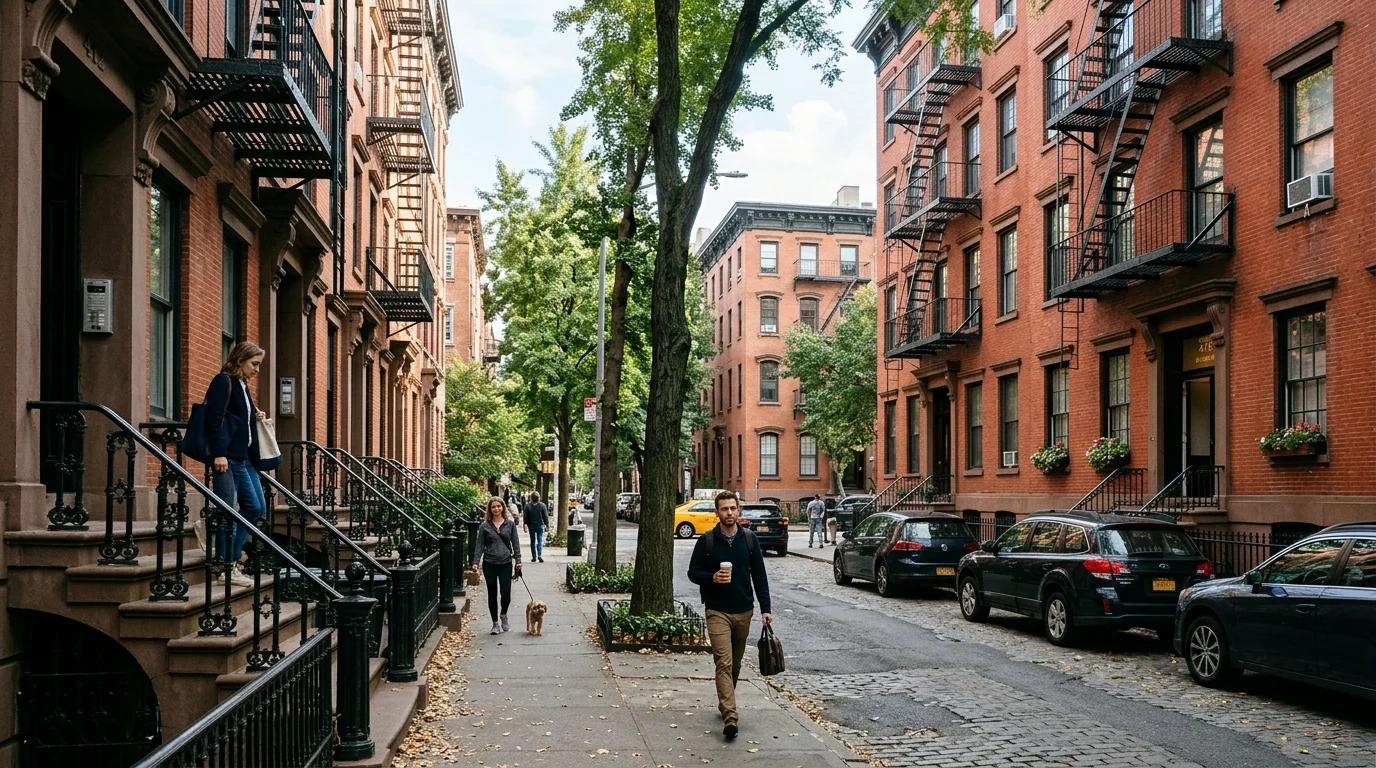
Classic New York City residential pre-war apartment buildings with fire escapes and front stoops along a tree-lined sidewalk.

Residential rental buildings in New York City. The Department of Consumer and Worker Protection has issued final enforcement rules under Local Law 119 (the FARE Act), prohibiting landlords from passing broker commissions onto prospective tenants.

NY DISTRICT NEWS

KEY FINDINGS

  • •DCWP issues final administrative enforcement framework for Local Law 119 (the FARE Act), ending tenant-paid broker fees when an agent represents the landlord.
  • •All residential rental listings must itemize mandatory move-in fees and are prohibited from disguising commissions as administrative charges.
  • •Violators face escalating civil penalties from $500 up to $2,000 per violation, accompanied by mandatory full fee restitution to affected renters.
  • •Tenants retain the right to independently hire their own broker, but landlords cannot condition rental access on tenant broker agreements.
  • •City establishes a specialized 311 reporting channel and expedited complaint processing within DCWP's Consumer Protection Division.
WHY THIS MATTERS

The FARE Act fundamentally dismantles New York City's historic anomaly of forcing prospective tenants to pay thousands of dollars in fees to brokers representing property owners, significantly lowering the upfront capital required to secure an apartment.

NEW YORK — In what municipal officials are describing as the most significant recalibration of New York City's residential leasing regulations in decades, the Department of Consumer and Worker Protection (DCWP) has published its formal enforcement guidelines under Local Law 119 of 2024—the Fairness in Apartment Rental Expenses (FARE) Act.

The comprehensive regulatory framework establishes strict administrative procedures, itemized listing disclosure mandates, and civil penalty schedules targeting property owners and brokerage firms that attempt to shift landlord representation fees onto prospective tenants.
Under the law, enacted after a decisive veto-proof City Council vote, the long-standing New York practice of forcing renters to pay up to 15 percent of an annual lease to an agent hired by the landlord has been officially outlawed. DCWP's finalized rules clarify that any agent who markets a property on behalf of an owner is legally deemed the landlord's representative, making the landlord solely responsible for paying their compensation.
“For generations, New York was the only major housing market in America where a renter was forced to pay thousands of dollars out of pocket to hire someone working against their own financial interests,” stated City Council Member Chi Ossé, prime sponsor of the legislation. “These enforcement rules give our city agencies the teeth required to guarantee that when a landlord hires a broker, the landlord writes the check.”
The DCWP guidelines establish a three-tiered enforcement apparatus. First, all digital and print rental advertisements—across platforms including StreetEasy, Zillow, Craigslist, and individual brokerage portals—must explicitly itemize all mandatory move-in costs, prohibiting the concealment of broker commissions behind vague 'administrative fees,' 'application processing charges,' or 'lease facilitation costs.'
Second, the agency is deploying an expedited consumer intake protocol within 311 and online portals, allowing renters who are unlawfully pressured into paying broker fees to submit documentation directly to DCWP investigators. Landlords and brokers found in violation face civil penalties starting at $500 for a first offense, escalating to $1,000 for a second violation, and up to $2,000 for each subsequent willful transgression, in addition to mandatory restitution of all unlawful fees collected.
The rules maintain a clear distinction for tenant-retained brokers: prospective renters remain free to independently hire a licensed real estate agent to represent them in an apartment search, negotiate lease terms, and accompany them on private showings. However, the DCWP rules explicitly forbid landlords or listing agents from conditioning the showing, application, or leasing of a unit on the tenant signing an exclusive representation agreement with a third-party broker.
Real estate trade associations, which mounted vigorous legal and legislative resistance during the bill's drafting, have raised operational concerns regarding the short timeline for updating existing standard listing agreements. Several management firms have cautioned that landlords may seek to offset commission expenses by raising baseline contractual rents across non-stabilized market-rate portfolios.
However, municipal fiscal analysts and tenant advocacy coalitions countered that upfront transaction friction has historically trapped tens of thousands of working New Yorkers in substandard housing by demanding between $8,000 and $12,000 in upfront cash—combining first month's rent, a security deposit, and an exorbitant broker fee—merely to secure an apartment key.
With DCWP holding public outreach workshops and launching an informational compliance campaign for licensed brokers and property managers across the five boroughs, the rules signal an aggressive municipal commitment to enforcing transparency across the city's volatile rental landscape.
NY

By NY District News Staff

NY District News reporters cover local government, business, consumer issues, tax fairness, and public accountability across New York.

Share Record:
XFB

Know More About This Story?

If you have documents, records, correspondence, photographs or first-hand information related to this investigation, NY District News wants to hear from you.

CONTINUE READING: MORE FROM NY DISTRICT NEWS

Circular Loop Navigation
THE DISTRICT BRIEF

Serious reporting. Right in your inbox.

Investigations, document dumps, and local accountability stories. No visual noise. Just New York journalism that matters.

Weekly accountability reports. Never shared. Unsubscribe anytime.