Wednesday, September 2, 2026
CONSUMER AFFAIRS• REGIONAL REPORT

City Council Approves Intro 891-A Outlawing Algorithmic Surveillance Pricing and Secret Consumer Data Tracking

Speaker Julie Menin and Consumer Protection Committee ban AI-driven personalized markups across New York City retail, ticketing, and online commerce.
By NY District News Staff•City Hall, New York
November 13, 2026|7 min read
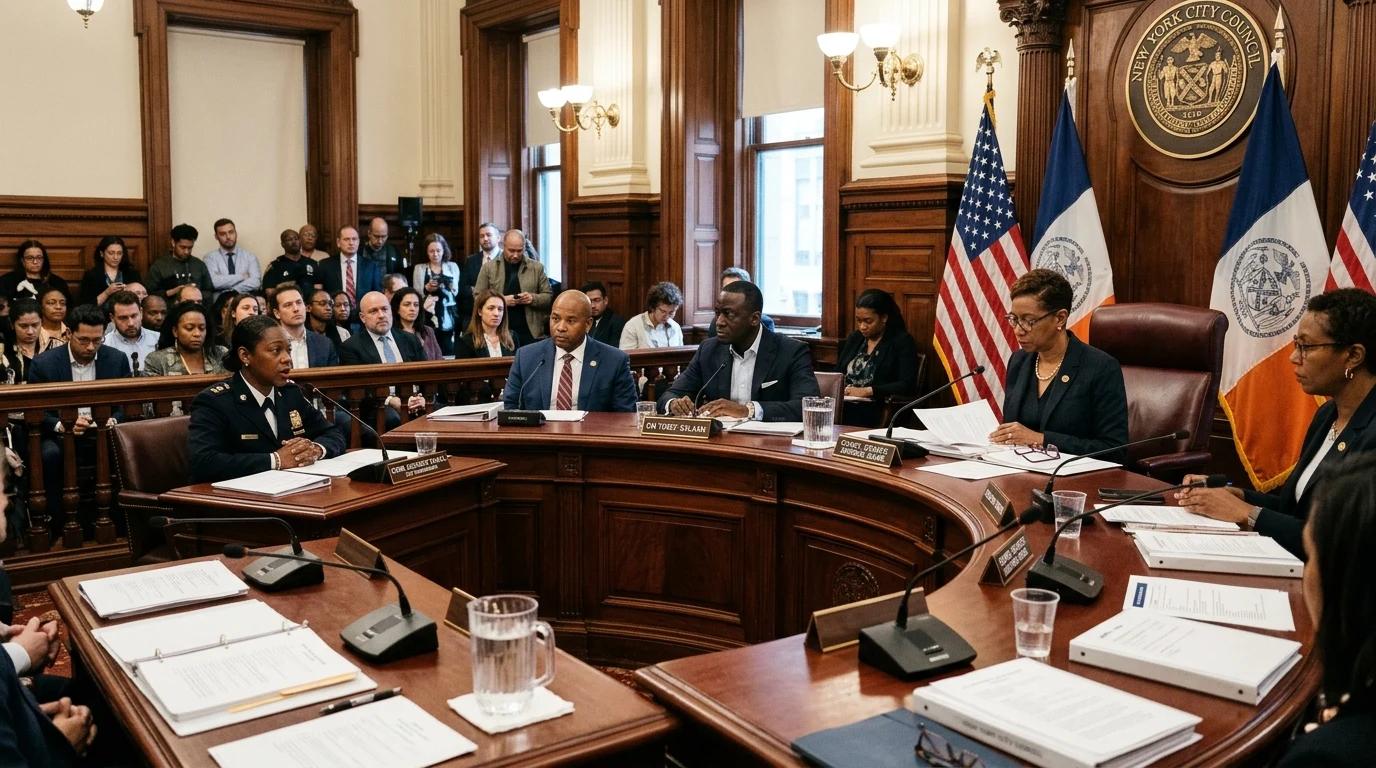
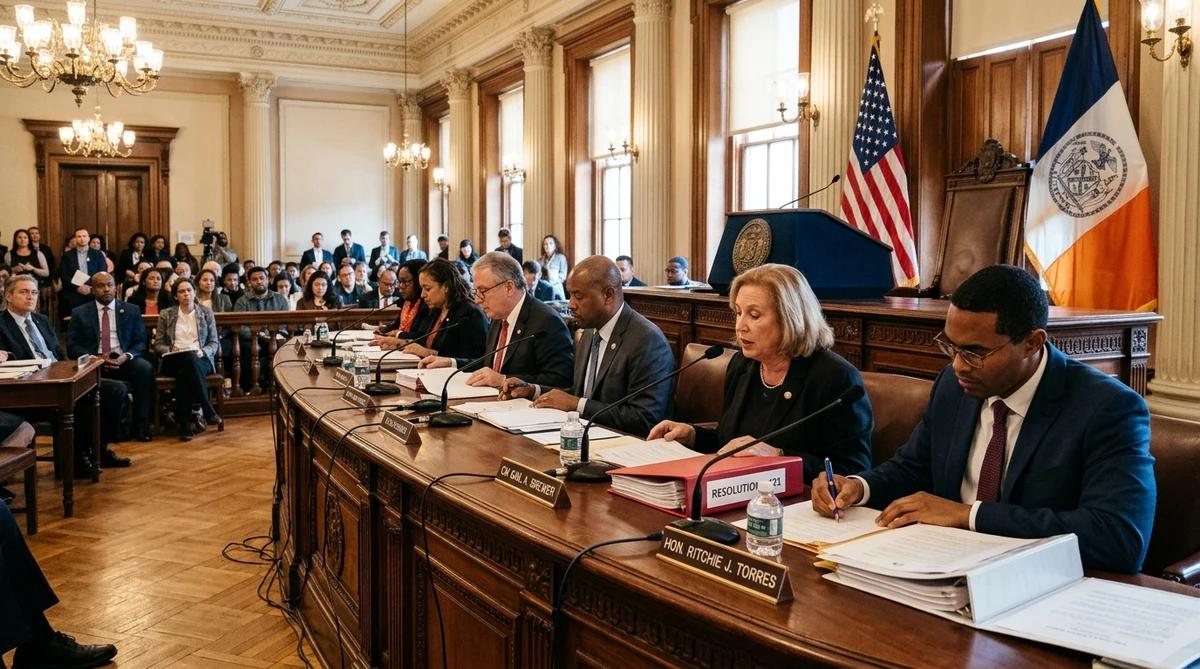
The New York City Council chamber inside City Hall during an official legislative hearing on consumer protections and municipal commerce regulations.

Members of the New York City Council convene inside the City Hall chamber to vote on Intro 891-A. The landmark municipal legislation prohibits algorithmic surveillance pricing, imposing civil penalties of up to ,000 per violation enforced by the Department of Consumer and Worker Protection.

NY DISTRICT NEWS

KEY FINDINGS

  • •Bans Algorithmic Discrimination: Outlaws the corporate practice of adjusting product or service prices based on individual consumer data, browsing history, or geographic tracking.
  • •Robust DCWP Enforcement: Grants the NYC Department of Consumer and Worker Protection authority to impose civil penalties of up to ,000 for each algorithmic pricing violation.
  • •Protects Legitimate Promotions: Maintains explicit exemptions for bona fide loyalty programs, student and senior discounts, seasonal sales, and volume purchases.
  • •Algorithmic Audit Rights: Empowers city regulators to subpoena algorithmic pricing source models and data feeds during deceptive practices investigations.
WHY THIS MATTERS

As corporate digital commerce increasingly leverages predictive AI and mobile geolocation to segment consumers, New York City becomes the first major American metropolis to establish a statutory wall between personal data tracking and checkout pricing, preserving transparency and equitable costs for working-class New Yorkers.

NEW YORK — In a decisive move establishing New York City as the nation's premier battleground against algorithmic consumer exploitation, the City Council voted overwhelmingly on Thursday to enact Introduction 891-A, officially banning the practice of 'surveillance pricing' across the five boroughs. The legislation, sponsored by Speaker Julie Menin and advanced through the Committee on Consumer and Worker Protection, prohibits commercial entities and online retail platforms from utilizing consumers' personal browsing history, location telemetry, device specifications, or purchasing habits to dynamically adjust prices on identical merchandise and everyday services.

Surveillance pricing has rapidly emerged over recent years as retail conglomerates, ride-hailing services, delivery platforms, and digital grocery providers increasingly deployed proprietary predictive algorithms. By evaluating granular data signals—including a user's cellular device battery level, geographic zip code, income bracket inferences, and real-time browsing latency—automated systems could quietly calculate an individual buyer's maximum willingness to pay, presenting inflated checkout prices to consumers perceived as less price-sensitive while offering standard rates to others.
'New Yorkers are already enduring an unprecedented cost-of-living crunch, and the idea that corporations can secretly weaponize someone's personal data against them at checkout to extract higher prices is unacceptable,' declared Speaker Julie Menin during the post-vote press conference on the steps of City Hall. 'Whether you are ordering diapers online, booking transit, or purchasing household essentials, transparency is non-negotiable. Intro 891-A levels the economic playing field and ensures that the price you see is the price everyone pays, regardless of what an algorithmic black box knows about your personal life.'
Enforcement of the new statute will be spearheaded by the NYC Department of Consumer and Worker Protection (DCWP), which receives expanded administrative authority to conduct algorithmic compliance audits and issue subpoenas for data ingestion pipelines. Under the newly ratified framework, corporations found guilty of deploying algorithmic price differentiation will face civil penalties of up to ,000 for each violation. Crucially, the legislation treats each separate discriminatory transaction or checkout attempt as an independent offense, exposing habitual violators to potentially severe cumulative financial liabilities.
To address concerns raised by the local business community during public committee hearings, lawmakers crafted explicit statutory exemptions to safeguard traditional, transparent commercial promotions. The ban strictly excludes bona fide customer loyalty and rewards programs, senior and student discounts, military veteran allowances, volume bulk savings, and standard wholesale arrangements. Furthermore, DCWP officials outlined a comprehensive 90-day technical guidance window to assist local independent retailers in updating third-party point-of-sale software and verifying algorithmic vendor compliance before formal administrative citations begin.
Consumer privacy advocates and civil rights leaders hailed the legislative milestone as a pivotal national precedent. Organizations including Consumer Reports and local legal aid societies noted that surveillance pricing algorithms disproportionately penalize low-income New Yorkers residing in banking and retail deserts, where lack of competing brick-and-mortar stores often forces reliance on digital delivery apps. Advocacy groups are now urging the Federal Trade Commission (FTC) to adopt New York's municipal statute as a blueprint for nationwide rulemaking against corporate automated pricing models.
Intro 891-A marks the latest in a series of aggressive consumer protection measures enacted by the City Council in 2026, arriving on the heels of the landmark FARE Act banning forced tenant-paid broker fees and sweeping regulatory probes into hidden third-party utility charges. As the legislation heads to the Mayor's desk for executive signature, city regulators are already preparing digital intake portals for consumer tips, signaling an era of heightened municipal scrutiny over artificial intelligence in New York's marketplace.
NY

By NY District News Staff

NY District News reporters cover local government, business, consumer issues, tax fairness, and public accountability across New York.

Share Record:
XFB

Know More About This Story?

If you have documents, records, correspondence, photographs or first-hand information related to this investigation, NY District News wants to hear from you.

CONTINUE READING: MORE FROM NY DISTRICT NEWS

Circular Loop Navigation
THE DISTRICT BRIEF

Serious reporting. Right in your inbox.

Investigations, document dumps, and local accountability stories. No visual noise. Just New York journalism that matters.

Weekly accountability reports. Never shared. Unsubscribe anytime.